Silver jewelry has been treasured for centuries for its beauty, versatility, and timeless appeal. Whether you’ve just purchased your first sterling silver piece or you’re a seasoned collector, knowing how to care for your silver jewelry is essential to keep it looking its best for years to come.
But silver does require a little attention. Over time, even your most-loved pieces can start to lose their shine. The good news? With just a few simple habits and some easy cleaning techniques, you can preserve that beautiful sparkle and enjoy your silver jewelry for a lifetime.
Why Does Silver Tarnish?
Before we dive into care tips, it helps to understand what you’re dealing with. Sterling silver is an alloy made of 92.5% pure silver and 7.5% other metals, usually copper. While this combination makes silver strong and durable enough for everyday wear, the copper content also makes it prone to tarnishing.
Tarnish is a natural chemical reaction that occurs when silver comes into contact with sulfur-containing compounds in the air. This forms a thin layer of silver sulfide on the surface, causing the metal to darken or lose its shine. Several factors can accelerate this process:
- Humidity and moisture: High humidity acts as a catalyst for tarnishing
- Air pollution: Sulfur gases in the air speed up the reaction
- Skin contact: Natural oils, sweat, and cosmetics can react with the metal
- Chemicals: Perfumes, lotions, cleaning products, and chlorine all contribute to faster tarnishing
Here’s the reassuring part: tarnish is not a sign of poor quality — it’s completely normal and happens even with high-end pieces. It’s also only surface-deep and can be easily cleaned.
Daily Care: Mindful Habits for Every Day
The best way to care for your silver jewelry starts with how you wear it. As the saying goes, prevention is better than cure.
The “Last On, First Off” Rule
Make your silver jewelry the last thing you put on and the first thing you take off. This simple habit can make a world of difference:
- Apply perfumes, lotions, and hairspray first, then put on your jewelry. Chemicals in these products can react with silver and speed up tarnishing.
- Remove your jewelry before showering, bathing, or swimming. Chlorine and saltwater are particularly damaging.
- Take it off before exercising — sweat contains salts and acids that react with silver.
- Remove necklaces, rings, and bracelets before sleeping to avoid friction and oxidation.
Wear It Often (Yes, Really!)
Here’s a surprising tip: wearing your silver jewelry regularly actually helps prevent tarnish. Your skin’s natural oils act as a gentle protective barrier, and the natural friction from daily wear helps keep tarnish at bay. Silver jewelry that is regularly used typically needs less care.
Keep It Dry
Moisture is one of silver’s biggest enemies. Always dry your jewelry thoroughly if it gets wet, and avoid storing it in humid places like bathrooms.
Cleaning Your Silver Jewelry: Step-by-Step
Regular cleaning is essential to keeping your sterling silver jewelry looking its best. Here are the safest and most effective methods.
Method 1: The Gentle Polish (For Light Tarnish)
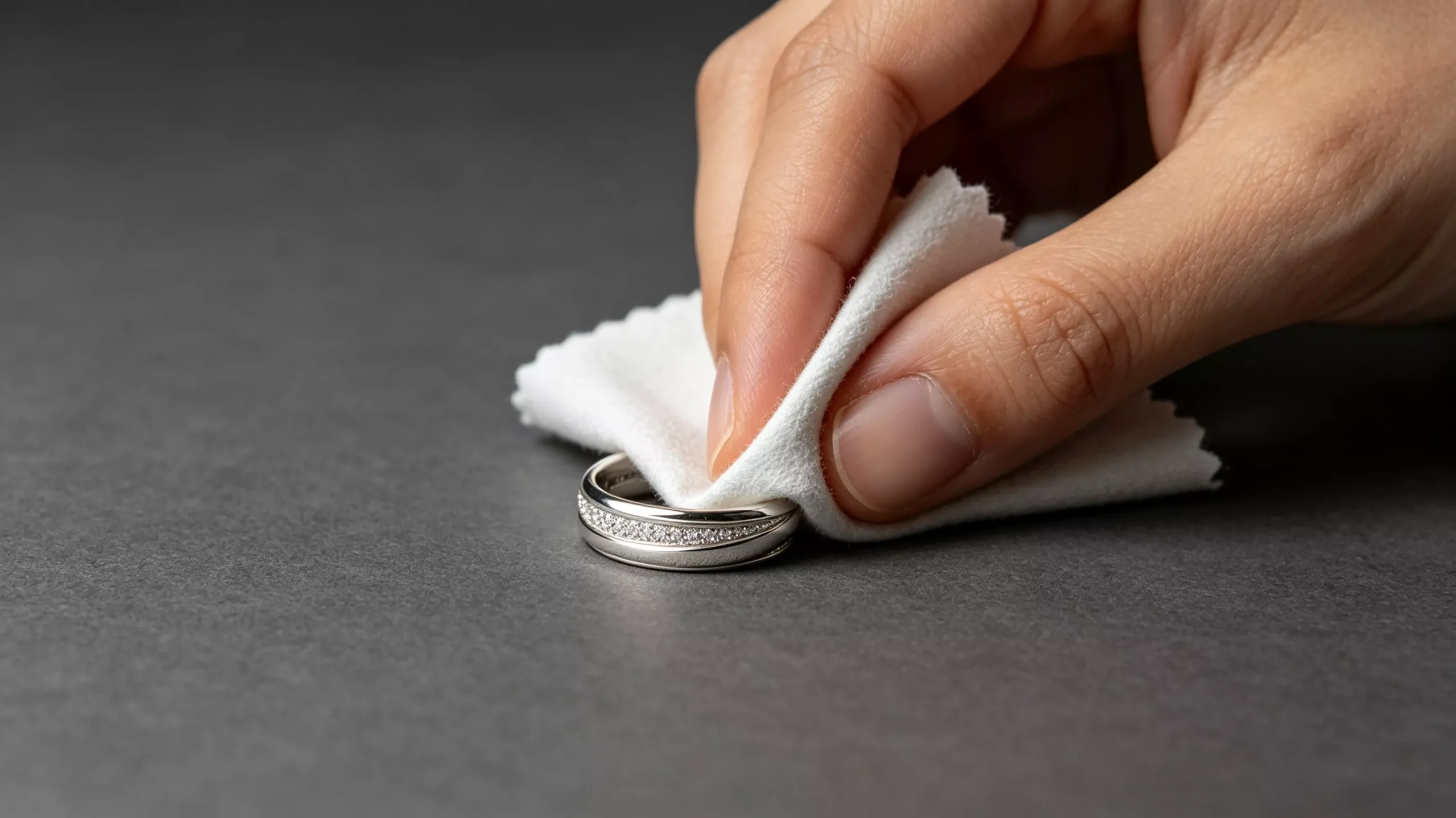
For everyday maintenance and light tarnish, a soft silver polishing cloth is your best friend. Simply buff the silver gently with the cloth to restore its shine. These specially treated cloths remove tarnish without scratching the surface and are ideal for quick touch-ups.
Important: Never wash silver polishing cloths — the cleaning agents will wash away.
Method 2: Soap and Warm Water (For Regular Cleaning)
This is the gentlest method and a great first step for most pieces:
- Mix a few drops of mild dish soap with warm water
- Soak your silver jewelry for a few minutes
- Use a soft cloth or a soft-bristled toothbrush to gently clean
- Rinse thoroughly with clean water
- Dry with a soft, lint-free cloth
Method 3: Baking Soda Paste (For Stubborn Tarnish)
For slightly tarnished pieces, make a paste using three parts baking soda to one part water:
- Gently rub the paste onto the jewelry with your fingers or a soft cloth
- Rinse thoroughly and dry well
- Avoid this method for pieces with delicate gemstones as the mixture is slightly abrasive
Method 4: Aluminium Foil and Baking Soda (For Heavy Tarnish)
For heavily tarnished silver, this chemical reaction method works wonders:
- Line a bowl with aluminium foil
- Add 1–2 tablespoons of baking soda
- Pour in enough hot water to cover your jewelry
- Place your silver pieces in the solution and let them soak for 10–15 minutes
- Rinse and dry thoroughly
The tarnish will transfer from the silver to the foil through a chemical reaction called ion exchange. Note: This method is not suitable for jewelry with gemstones.
What to Avoid When Cleaning Silver
Just as important as knowing what to do is knowing what not to do:
- Avoid silver dip cleaners: While they work quickly, they are chemically aggressive and can damage silver over time, eroding fine details and weakening solder joints
- Never use abrasive cleaners like those containing alcohol or ammonia
- Don’t scrub too hard — silver is a soft metal and can scratch
- Avoid toothpaste on gemstones — it can damage delicate stones
Special Care for Jewelry with Gemstones
If your silver jewelry features gemstones, extra caution is needed:
- Soft, porous stones like opals, pearls, turquoise, and coral should never be immersed in water
- Simply use a soft, slightly damp cloth to gently wipe the stones
- Never use silver dips or ultrasonic cleaners on jewelry with these delicate stones
- Avoid the baking soda and aluminium foil method for any piece with gemstones
Proper Storage: The Key to Long-Term Care
Storing your silver jewelry correctly is just as important as cleaning it.
The Golden Rules of Storage
- Keep it dry: Store silver in a cool, dry place away from direct sunlight
- Limit air exposure: Use airtight containers, zip-lock bags, or anti-tarnish pouches
- Separate each piece: Store pieces individually to avoid scratches and tangling
- Add moisture absorbers: Place silica gel packets or a piece of chalk in your storage box to absorb humidity
Where NOT to Store Silver
- The bathroom — it’s the most humid room in the house
- The kitchen — cooking fumes and temperature changes are corrosive
- In direct sunlight — heat and UV rays can alter finishes
A Note on Packaging
Avoid storing silver in contact with cardboard, paper, or rubber bands, as these can accelerate tarnishing. PVC-free zip-lock bags are highly effective because they almost completely eliminate contact with oxygen.
The Professional Touch
If your silver jewelry is heavily tarnished, has intricate details, or contains delicate gemstones, consider professional cleaning. Many jewellers offer ultrasonic cleaning services or professional restoration that can bring your pieces back to their original beauty.
Summary: Your Silver Jewelry Care Checklist
| Do | Don’t |
|---|---|
| ✅ Wear your silver regularly | ❌ Wear silver in the shower, pool, or ocean |
| ✅ Remove before exercise and sleep | ❌ Apply perfumes or lotions after putting on jewelry |
| ✅ Clean with a soft polishing cloth | ❌ Use silver dip cleaners |
| ✅ Store in airtight, dry containers | ❌ Store in humid places like bathrooms |
| ✅ Keep pieces separated | ❌ Store pieces touching each other |
| ✅ Use silica gel in storage | ❌ Store near rubber or cardboard |
| ✅ Clean gemstones with a damp cloth only | ❌ Soak porous gemstones in water |
Tarnish is a natural part of owning silver jewelry, but with proper care and maintenance, it can be managed effectively. A little attention goes a long way in keeping your favourite pieces shining bright. Whether you’re caring for a special necklace or your everyday ring, these simple habits will preserve the beauty of your silver jewelry for years to come.